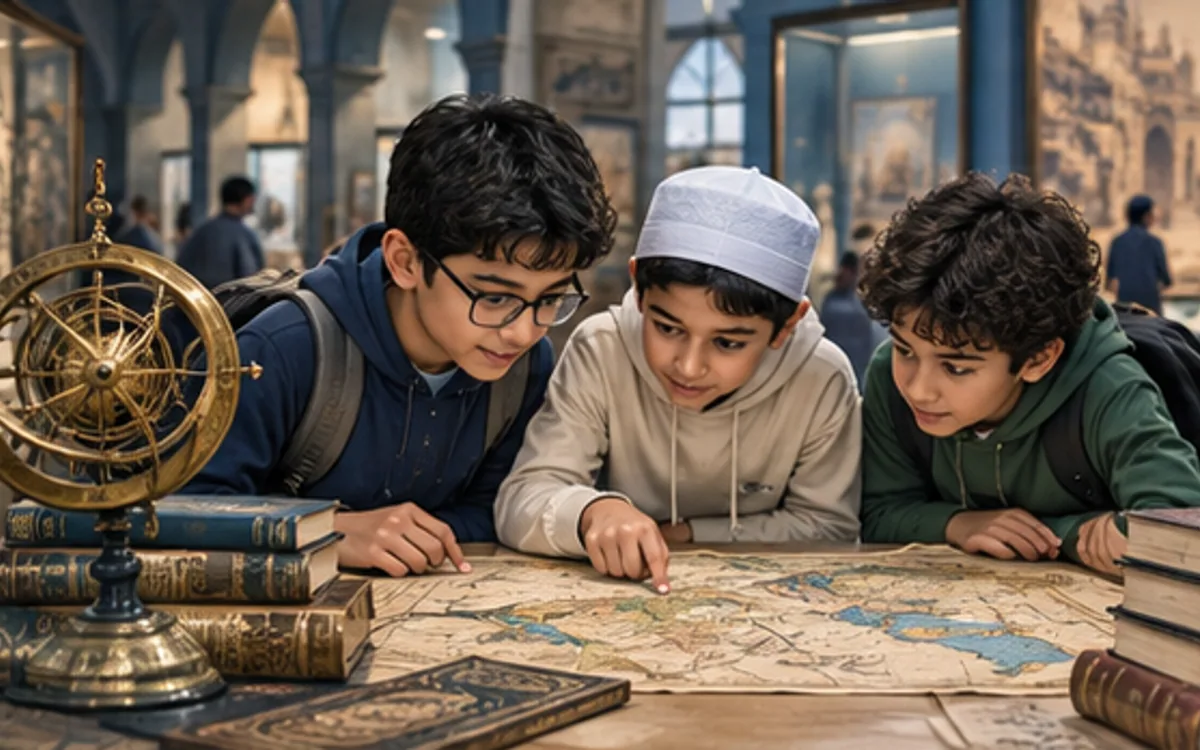


Islamic history can help young people understand identity and human choices when it is studied with clear sources and room for questions.
Overview
History is often introduced as a list of names and dates. Yet the questions that make it relevant can be more immediate: why did a society change, how did knowledge develop, and what happened to people because of a leader's decisions?
For young Muslims, exploring history can provide context for the heritage they encounter today. Pride needs to accompany careful inquiry. An appealing story is not automatically accurate, and the past cannot always be reduced to flawless examples.
Distinguish different stories and sources
Separate Qur'anic accounts, hadith reports, historical writing, and popular stories. They do not all carry the same evidential status. A scene in a historical film, for example, may have been created for dramatic purposes and should not automatically be treated as a documented event.
When reading an interesting claim, ask who wrote it, when, and on what evidence. If sources differ, record the difference. Acknowledging uncertainty is more responsible than filling gaps with details that merely seem to fit.
Connect learning with a place, object, or familiar question. A trade map or a photograph of a building can begin a discussion, followed by reading that explains the context.
Learn lessons without treating every account alike
Qur'an 12:111 describes lessons in the stories for people of understanding. Its context is the accounts conveyed through revelation; it does not give every circulating historical story the same truth status.
Sahih Muslim 2699a includes the virtue of seeking knowledge. In historical study, that spirit can be expressed by reading sources, asking questions, and revising an understanding when the evidence changes.
Turn curiosity into an activity
Choose a narrow topic and build a simple timeline from sources that can be checked. Mark uncertain details and seek help from a competent teacher or writer. The activity encourages accuracy while helping you understand the sequence of events.
Brother Zaid and Storyteller Asma in Muslim AI can accompany conversations about history and stories. Ask for sources and check them yourself; AI-generated historical details can still be wrong.
Try: "Help me prepare questions for studying one period of Islamic history. Distinguish facts that need sources from ideas for learning activities." Begin with a question that makes you want to read further.

Explore Muslim AI Companions
Continue reflection with the Muslim AI companion catalog.